Collective Worship
Prayer & Liturgy
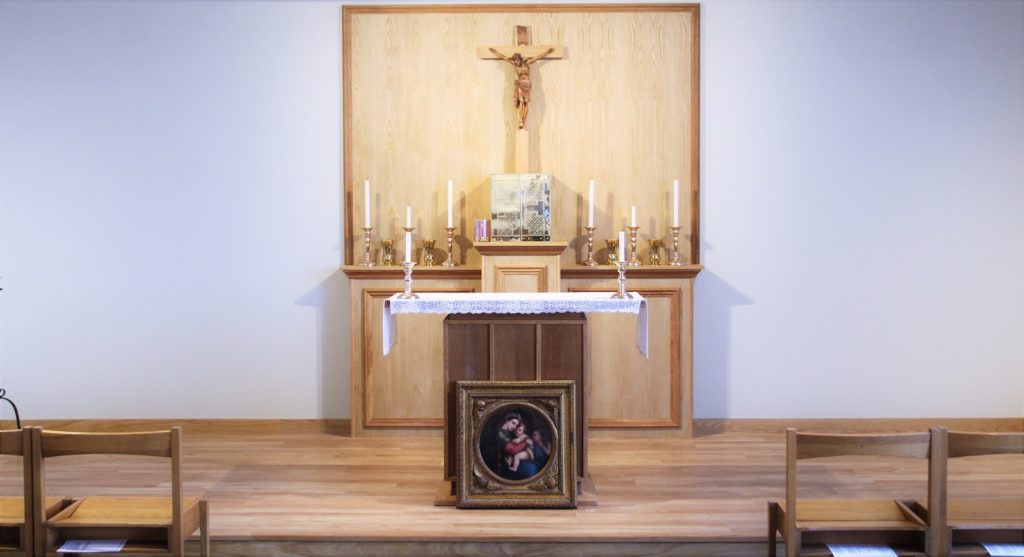
Regular liturgical celebration and prayer are at heart of school life and our daily routine. The Blessed Francis Jordan Chapel provides a beautiful and peaceful setting for prayer and sacramental liturgies for up to 70 pupils. The Blessed Sacrament is reserved so it can be said that Christ is, truely, at the centre of our school.
Chapel Liturgies
| Form Group Masses | 8.30am - Thursday |
| Whole-school Mass | Feast Days & Holy Days of Obligation |
Society of the divine Saviour
The Society of the Divine Saviour, popularly known as the Salvatorians, is an international, religious, congregation of priests and brothers in the Catholic Church, founded in Rome, December 8, 1881, by the Father Francis Mary of the Cross Jordan.
Our official title is the Society of the Divine Saviour and our main purpose is to bring people everywhere to a greater knowledge and love of our Divine Saviour. This means that we are an international missionary order in the very broadest sense.
The purpose of the Society is to strengthen, to defend and to spread the Catholic faith everywhere in so far as this is committed to it by Divine Providence. Therefore, by exercising this ecclesiastical teaching function in word and writing, it intends to achieve the end that all people might know more and more the one true God and Him whom He sent, Jesus Christ.
Rule from 1882
We also believe it is important to use all the ways and means that Christ inspires to spread his Good News. For this reason Salvatorians are to be found using their talents in all sorts of capacities in parishes, missions, schools, universities, hospitals and many other situations throughout the world.
The British Pro-province consists of thirty members living and working in Britain and Ireland but coming from several different countries.
Our Motherhouse is in Rome near St Peter’s Square and in a special chapel there the tomb of our Founder, Father Jordan, is located. There are about 1,200 Salvatorian Fathers and Brothers worldwide.
For further information on the Society of the Divine Saviour http://www.sds.org/
Father Richard Mway – Provincial & Parish Priest, is the Vice Chair on the school Governing Body.
St. Joseph's Parish
The Parish of St Joseph’s is staffed by the Salvatorians, a Roman Catholic Religious Order founded in Rome in 1881 by the Venerable Francis Jordan.
Father Jordan also founded the Sisters of the Divine Saviour.
For further information please see http://www.catholicwealdstone.org/
Our Patron Saints
Saint Alban
Saint Alban was a Romano-British citizen of the third century in the Roman city of Verulamium (now called St Albans). During his lifetime, Christians began to suffer persecution. Alban met a Christian priest fleeing from the Romans and sheltered him in his house for a number of days. The priest Amphibalus prayed and kept vigil day and night, and Alban was so impressed with the priest’s faith that he asked to be taught by the priest. He converted to Christianity just before the authorities came to arrest the fugitive priest. Alban, inspired by his new-found faith, exchanged clothes with Amphibalus, allowing him to escape. Consequently, Alban was arrested and brought before the city magistrate. As Alban refused to pay homage to Roman gods, the magistrate ordered that Alban should receive the punishment due to the priest. He was taken up a hillside to a site of execution where he was beheaded. Despite escaping, Amphibalus too was later arrested and martyred at Redbourn, a few miles away.
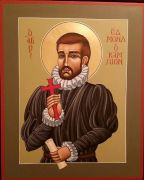
Saint Edmund Campion
Saint Edmund Campion was an English priest who belonged to the ‘Society of Jesus’, more commonly known as the ‘Jesuits’. Campion was alive at a time where Roman Catholicism was banned in England. Despite the ban, he continued to be a faithful priest to his people, rejecting the validity of the Anglican Church, and conducting an underground ministry. Campion was eventually arrested by priest hunters, convicted of high treason, and hung, drawn and quartered at Tyburn, close to modern-day Marble Arch in London.
Because he died defending his faith, St Edmund Campion is remembered as one of the Forty Martyrs of England and Wales, having been canonised in 1970 by Pope Paul VI.
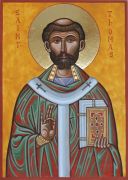
Saint Thomas Becket
Saint Thomas Becket was born in around 1120, the son of a London merchant. He was well-educated and quickly became an agent to Theobald, Archbishop of Canterbury, who sent him on several missions to Rome. Becket’s talents were noticed by Henry II, who made him his chancellor and the two became close friends. When Theobald died in 1161, Henry made Becket archbishop. Becket transformed himself from a pleasure-loving courtier into a serious, simply-dressed priest.
The king and his archbishop’s friendship was put under strain when it became clear that Becket would now stand up for the church in its disagreements with the king. In 1164, realising the extent of Henry’s displeasure, Becket fled into exile in France, and remained in exile for several years. He returned in 1170.
On the 29 December 1170, four knights, believing the king wanted Becket out of the way, confronted and murdered Becket in Canterbury Cathedral.
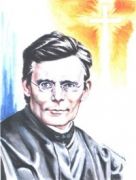
Blessed Francis 'Mary of the Cross' Jordan
Fr Francis ‘Mary of the Cross’ Jordan was a German Roman Catholic priest and the founder of the Society of the Divine Savior, commonly called the Salvatorians. His life is currently under review by the Holy See, for his possible canonization. During this period, he had a growing conviction that he was being called by God to found a new apostolic work in the Church, which had as its goal the unification of groups of priests and laity in spreading and defending the Catholic faith throughout the world. This conviction became even stronger during a trip to the Middle East in 1880. After returning to Rome, Jordan started implementing his idea of founding a community of members under religious vows and laypeople. This would be organized into three groups, called “grades”: the first would be those who committed to leave everything and, living in community, devote their whole lives to the mission of the organization; the second was to be for academics, who spread the faith by publications; and the third for those laypeople who, remaining in their families and within the reality of their everyday life, would proclaim the Savior through the witness of a good Christian life.
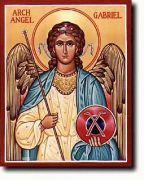
Saint Gabriel the Archangel
In Christian tradition Gabriel the archangel is the angel of mercy mentioned by name in the bible. Spirits who proclaim messages of supreme importance are called archangels and so it is fitting that the archangel Gabriel was sent to the Virgin Mary to announce the greatest of all messages; the birth of our Saviour, Lord Jesus Christ. During many of the announcements attributed to Gabriel in religious texts, Gabriel presents a challenging message with confidence, authority, and peace, urging people to trust in God’s power. The messages that God assigns the archangel Gabriel to deliver, often extend people’s faith in a significant way.
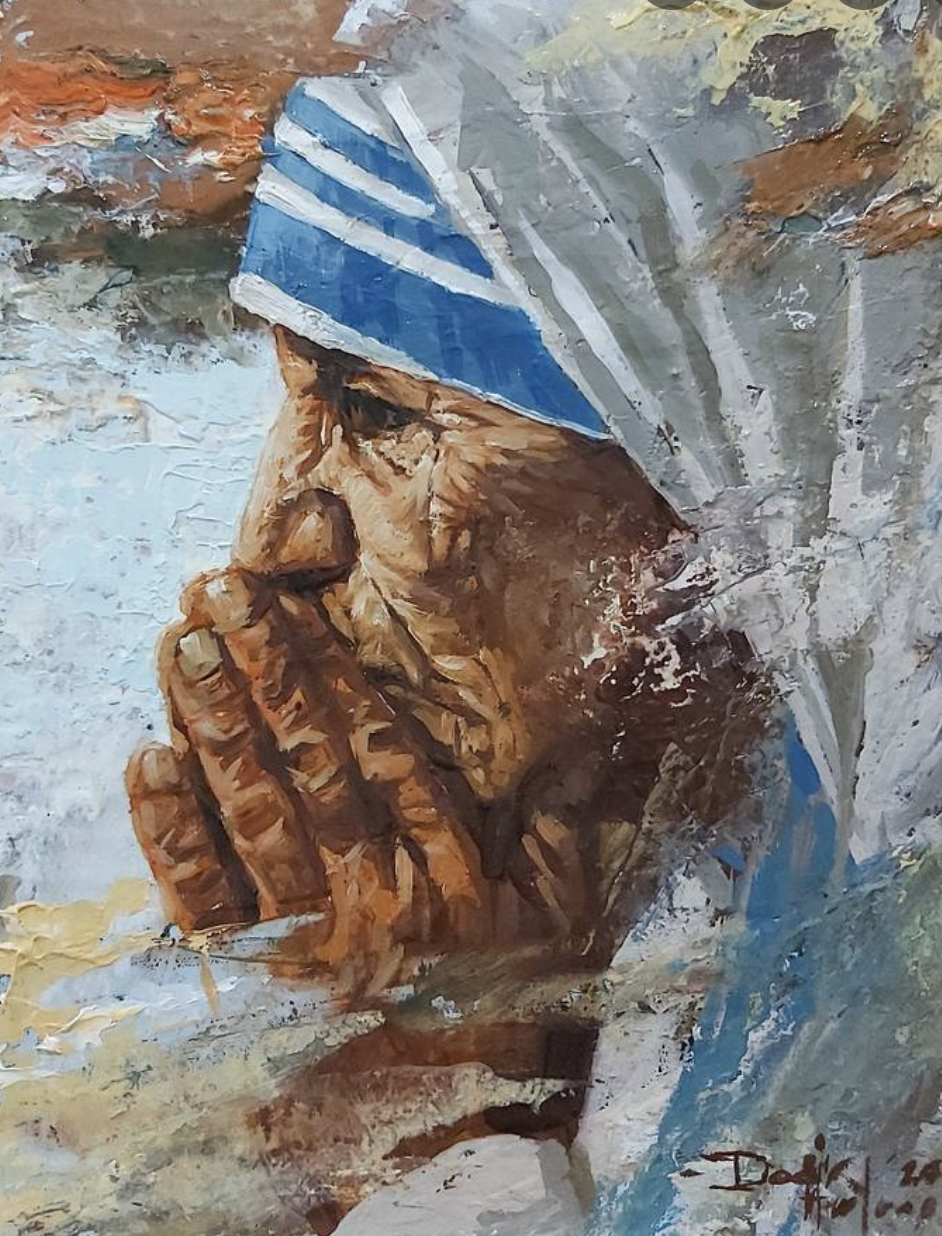
Saint Theresa of Calcutta
Saint Theresa of Calcutta, better known as ‘Mother Theresa’, was born in Macedonia. Having taught in India for 17 years, Mother Theresa felt that God was calling her to devote her life to caring for the sick and the poor. She founded the Order of the Missionaries of Charity, which quickly established a hospice; centres for the blind, aged and disabled; and a leper colony. In 1979, Mother Theresa received the Nobel Peace Prize for her humanitarian work. She died in 1997 and in December 2015, Pope Francis recognized a second miracle attributable to her, which cleared the way for her to be declared a Saint on September, 4 2016.